Theme: Demonic Spirits
Topic: Existence, Nature, and Locations of Demons
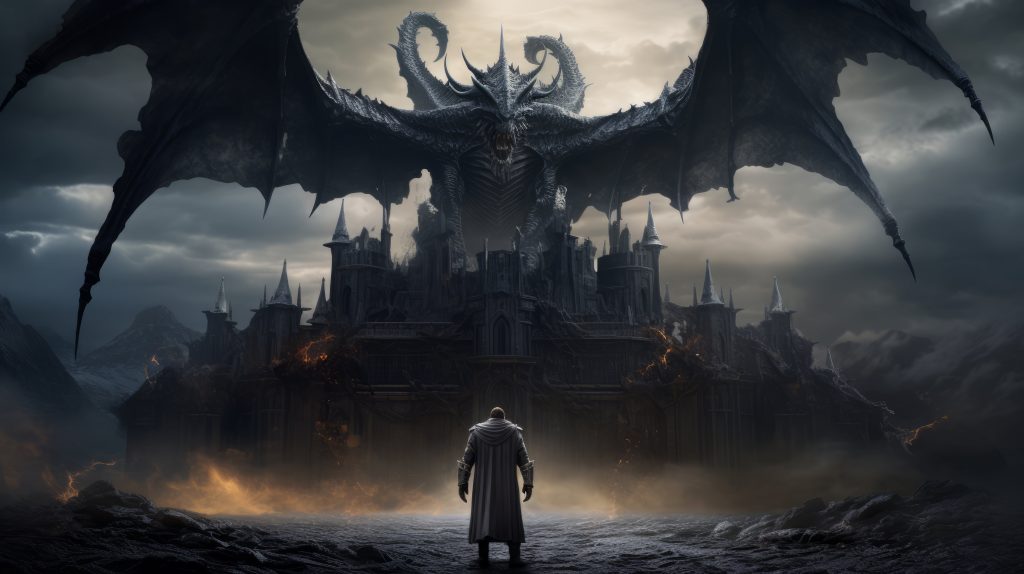
The idea of demonic spirits, their existence, and their locations varies widely depending on religious, cultural, philosophical, and psychological perspectives. Below is a comprehensive breakdown from multiple lenses:
🕊️ 1. Religious and Spiritual Perspectives
Christianity
- Existence: Demons are believed to be fallen angels who followed Lucifer in rebellion against God.
(Revelation 12:4–9; Isaiah 14; Luke 10:18) - Nature: Spiritual beings with malevolent intent, seeking to deceive, oppress, or possess humans.
- Locations:
- Some roam the Earth freely (Luke 11:24).
- Some are bound in spiritual chains awaiting judgment (2 Peter 2:4; Jude 1:6).
- Frequently encountered and cast out by Jesus in the Gospels (Mark 5; Luke 8).
Islam
- Existence: Associated with Shayatin, evil jinn who disobey God.
- Nature: Created from smokeless fire, jinn (including demons) have free will.
- Locations: Exist in a parallel hidden world, often dwelling in desolate places, ruins, or shadows.
African Traditional Religions
- Existence: Malevolent spirits are recognized, often linked to curses, ancestral offenses, or spiritual imbalance.
- Nature: Spirits can be invoked or warded off through rituals, sacrifices, or charms.
- Locations: Forests, rivers, crossroads, caves, or ancestral shrines.
Hinduism and Buddhism
- Existence: Concepts such as Asuras or Mara represent demonic or obstructive forces.
- Nature: Not always “evil” but opposing divine order, spiritual enlightenment, or cosmic harmony.
- Locations: Reside in lower realms or spiritual dimensions, metaphorically or literally.
🧠 2. Philosophical and Psychological Interpretations
- Existence: Demons may be viewed as symbols of internal struggles—addiction, anger, guilt, or destructive behaviors.
- Nature: Carl Jung described the “shadow self”—unacknowledged parts of the psyche that can “haunt” individuals.
- Modern psychiatry: Experiences of possession or haunting may be interpreted as dissociative or psychotic episodes.
👻 3. Folklore and Occult Traditions
- Existence: Cataloged in grimoires (e.g., The Lesser Key of Solomon, Dictionnaire Infernal).
- Nature: Each demon may have a name, rank, personality, and domain (e.g., Asmodeus: lust; Belial: lawlessness).
- Locations:
- Haunted places or abandoned sites.
- Ritual locations, objects, or summoning circles.
- Invoked during forbidden rites or occult practices.
🗺️ Where Are They “Located”?
- Spiritually: Non-corporeal, existing in a spiritual or unseen realm.
- Earthly Associations: Deserts, ruins, certain homes, temples, graveyards.
- Inside Individuals: Possession, oppression, or influence.
- Symbolically: Represented in the heart, mind, or behavior of people.
⚖️ Summary Table
| Tradition / Lens | Existence | Nature | Locations / Domains |
| Christianity | Yes | Fallen angels | Earth, spiritual realm |
| Islam | Yes | Evil jinn | Hidden realm, Earth |
| African Traditional Religions | Yes | Malevolent spirits | Nature, shrines |
| Psychology / Philosophy | Metaphorical | Aspects of the self | Psyche, behavior |
| Occult / Folklore | Yes | Named entities | Invoked spaces, haunted sites |
🔹 Conclusion
Understanding demons requires considering multiple perspectives—spiritual, cultural, symbolic, and psychological. Awareness of their existence, nature, and locations helps believers discern spiritual realities, practice vigilance, and seek protection through faith, prayer, and righteousness.
0 Comments